
Daily Sudoku Master
Daily Sudoku Master
Tap any cell to select it, then tap numbers 1-9 on the bottom keypad. Toggle Pencil Mode for candidate notes. Tap Eraser or Undo to fix mistakes.
Instant Play • No Downloads • Free on Web
Enjoying Free Tiny Games?
Share with friends & challenge them to beat your high score! Zero downloads, 100% free fun.
About Daily Sudoku Master
Welcome to Daily Sudoku Master on TinyFunApps — the premier brain logic destination crafted for desktop and mobile puzzle solvers worldwide! Engage your mind with authentic 9x9 Sudoku grids featuring guaranteed unique solutions across 4 balanced tiers: Easy, Medium, Hard, and Master. Take advantage of modern ergonomic tools including 1-tap Pencil Candidate Notes with smart auto-erasing, same-number and crosshair highlighting, instant conflict detection, unlimited undos, and logical hint assistants. Conquer unique Daily Challenges every single day to earn golden crown trophies and build unbroken calendar streaks. Zero downloads, instant play on any browser!
How to Play
Tap any cell to select it, then tap numbers 1-9 on the bottom keypad. Toggle Pencil Mode for candidate notes. Tap Eraser or Undo to fix mistakes.
Click cells with mouse or use Arrow Keys to navigate. Press 1-9 on your keyboard to enter numbers, Backspace/Delete to erase, N to toggle Pencil Notes, U to Undo.
Objective & Winning Rules
Fill the 9x9 grid so every row, column, and 3x3 box contains all digits from 1 to 9 without repetition.
Daily Sudoku Master Rules
Sudoku is played on a 9x9 grid divided into nine 3x3 boxes. Some cells start filled; the rest are yours to complete. The finished grid must contain the digits 1 through 9 exactly once in every row, exactly once in every column, and exactly once in every 3x3 box. Those three constraints are the entire rulebook.
A correctly constructed Sudoku has exactly one solution and can be reached by logic alone. You should never need to guess, and if you find yourself guessing you have missed a deduction rather than met an unfair puzzle. Difficulty comes from how many clues you start with and how deeply nested the required deductions are — this daily puzzle ships in four grades, from an Easy grid with 38 given clues down to Expert with 24.
Pencil notes are part of normal play, not a crutch. Writing the candidate digits into a cell is how essentially every strong solver works, because most techniques beyond the simplest ones are patterns among candidates rather than patterns among filled digits.
Daily Sudoku Master Strategy
Scanning for hidden singles
The first pass on any grid. Take a digit, look at a 3x3 box, and cross off every row and column already containing that digit. If exactly one cell in the box survives, that digit belongs there regardless of what else is unresolved. Working digit by digit through all nine boxes will finish an Easy grid outright and will open the door on a Medium one.
Naked singles and naked pairs
A naked single is a cell whose candidate list has shrunk to one digit — fill it. A naked pair is two cells in the same row, column, or box that share the same two candidates and nothing else. Neither cell can be anything but those two digits, so both digits can be eliminated from every other cell in that unit. Naked triples extend the same idea to three cells sharing three candidates.
Pointing pairs and box-line reduction
If every candidate for a digit inside one 3x3 box lies in the same row, then that digit must fall somewhere on that row segment — so it can be eliminated from the rest of the row outside the box. The reverse also holds: if a digit's candidates in a row all sit inside one box, eliminate it elsewhere in that box. This interaction between boxes and lines resolves a great many Hard grids on its own.
The X-wing
The first technique that feels like a genuine leap. Find a digit with exactly two candidate positions in each of two different rows, and those positions sit in the same two columns. Whichever way the pair resolves, that digit occupies one cell in each row and therefore claims both columns — so it can be eliminated from every other cell in those two columns. The same pattern works with rows and columns swapped.
Working the constrained regions first
Attention is the scarce resource, not technique. Spend it where the grid is most nearly full: the row, column, or box with the fewest empty cells has the shortest candidate lists and the highest chance of yielding a placement. Solving the dense areas first also feeds new eliminations into the sparse ones.
Keeping notes honest
The most common cause of an unsolvable-looking grid is a stale note rather than a wrong placement. Every time you place a digit, immediately strike it from the candidates in its row, column, and box. A single missed elimination will send you hunting for a technique that is not required.
Game Features
Pro Gameplay Tips
Daily Sudoku Master — Frequently Asked Questions
What are the rules of Sudoku?
Fill the 9x9 grid so that every row, every column, and every 3x3 box contains the digits 1 to 9 exactly once each. That is the whole rulebook — everything else is technique.
Does Sudoku require any maths?
No. The digits are just nine distinct symbols and no arithmetic is ever performed on them. You could play with nine colours or nine letters and the puzzle would be identical. It is a constraint puzzle, not a number puzzle.
Is there always exactly one solution?
For a properly constructed puzzle, yes, and every grid generated here has a unique solution. A puzzle with two solutions is considered malformed, because uniqueness is what guarantees the answer can be reached by deduction rather than by trial.
Do I ever need to guess?
No. Every puzzle here is solvable by logic from the given clues. If you reach a point where guessing feels necessary, there is a deduction available that you have not found — most often a pointing pair or a naked pair hiding in your candidate notes.
What makes a Sudoku harder?
Two things: how many clues you start with, and how deep the required chain of deductions runs. Easy grids start with 38 clues and fall to simple scanning. Expert grids start with 24 and need techniques like box-line reduction or an X-wing before they open up.
What are pencil notes for?
They record which digits remain possible in a cell. Almost every technique past basic scanning is a pattern among candidates rather than among filled digits, so notes are not a beginner's aid — they are how the harder grids are solved at all.
Is the daily puzzle the same for everyone?
Yes. The daily grid is generated from the date, so every player gets the identical puzzle that day and scores are directly comparable.
Game Specifications
Enjoying Free Tiny Games?
Share with friends & challenge them to beat your high score! Zero downloads, 100% free fun.
More Puzzle & Similar Games
Handpicked tiny games you might enjoy next.
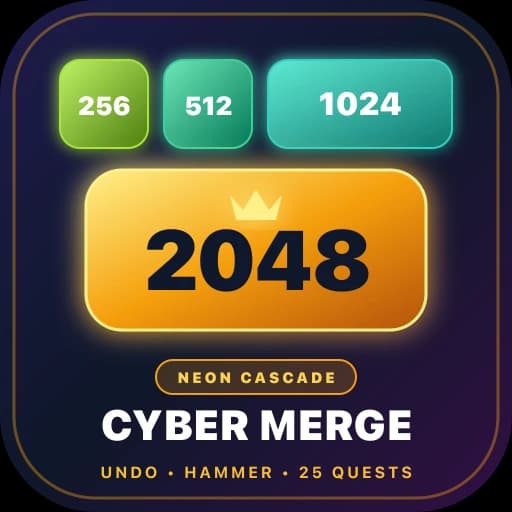
2048 Neon Cascade
Slide, Merge & Cascade Numbers with Cyber Glow & Tactical Power-Ups!
Slide and merge numbers to reach 2048 and beyond! Features 3x3 to 5x5 boards, Undo, Tile Smash Hammer, Board Shuffle, and 25 Quest stages.

Candy Match Odyssey
Match, Blast & Cascade Across 25 Sweet Candy Worlds!
Match 3 or more delicious candies to trigger explosive combos, Striped beams, Wrapped blast bombs, and Rainbow Color Bombs across 25 Quest stages and Endless Zen Arcade!
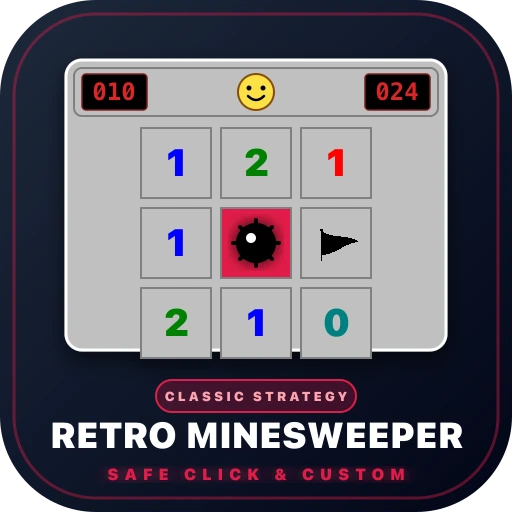
Retro Minesweeper
Classic Logic Puzzle with Guaranteed Safe Opening & Custom Grids!
Play authentic Retro Minesweeper with 100% safe opening first clicks! Master Beginner (9x9), Intermediate (16x16), Expert (30x16), Custom Grids, 25 Quest stages, and Daily Logic Challenges with fluid chording!
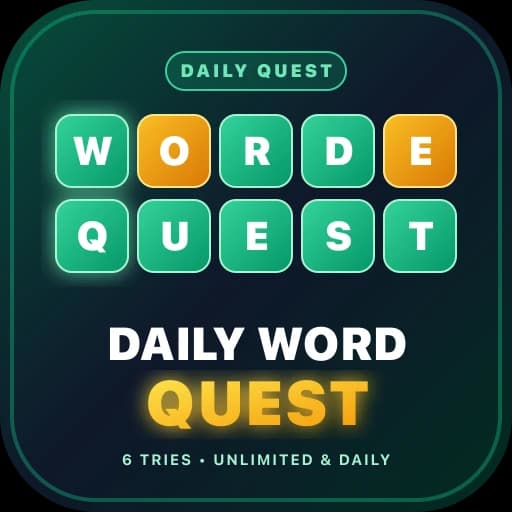
Daily Word Quest
Guess the Hidden 5-Letter Word in 6 Tries • Daily & Unlimited Modes!
Test your vocabulary and logic! Guess the mystery 5-letter word in 6 attempts with color-coded clues. Features Today's Official Daily Word & Unlimited Practice Mode.